When you need sliding door track repair Santa Barbara homeowners can trust, understanding why tracks fail in the first place is the smartest starting point. Santa Barbara’s coastal climate is beautiful — but it’s also uniquely hard on sliding doors.
Salt air, marine fog, and high humidity create a tough environment for metal tracks. Specifically, aluminum and steel tracks corrode faster within a mile of the coast. Santa Barbara’s warm, dry summers cause door frames to expand, while cooler, damp winters cause them to contract. This constant cycle warps tracks over time.
In addition, the region’s signature sundowner winds drive grit and debris deep into door channels. Many of Santa Barbara’s older estate and ranch-style homes still run on decades-old sliders that stick, sag, or drag — and a damaged track doesn’t just slow your door down. It also puts stress on rollers, the frame, and lock hardware.
Why Santa Barbara Tracks Fail Faster Than You Think
Several everyday factors wear tracks down fast in this coastal environment. Knowing the root causes helps you catch damage before it escalates.
- Heavy foot traffic bending the track lip
- Dirt and debris grinding into the track groove
- Improper installation leaving gaps that collect moisture
- Aging rollers that drag and gouge the track surface
- Hard water deposits from irrigation systems building up in the channel
For more on how rollers and tracks work together, see our guide on sliding door roller replacement.
A sticking or misaligned door is also a security risk. Our signs your sliding door needs professional repair resource breaks down exactly when to call a pro.
Bottom line: Santa Barbara’s environment is uniquely tough on sliding doors. Catching track damage early saves time, money, and frustration.
5 Warning Signs You Need Sliding Door Track Repair in Santa Barbara
Catching problems early saves time and money. In fact, ignoring small track issues can lead to full door replacement — a much costlier outcome. Here’s what to watch for.
1. The Door Sticks or Drags When You Open It
A door that grinds or catches is the most common red flag. However, many homeowners assume it’s just normal wear. In reality, it often means the track is bent, corroded, or packed with debris.
2. You Hear Scraping or Grinding Noises
Unusual sounds mean metal is rubbing where it shouldn’t. For example, a warped track forces rollers to grind along uneven surfaces. This wears down both the track and the rollers faster.
3. The Door Wobbles or Feels Unstable
A stable door should glide in a straight, smooth line. Because Santa Barbara’s coastal air accelerates rust and corrosion, tracks can weaken and shift over time. As a result, the door may rock side to side.
4. Visible Rust, Bends, or Cracks in the Track
Always inspect the track itself. Look for:
- Rust or oxidation along the track surface
- Bent or flattened sections from impact or heavy use
- Cracks or chips in aluminum or steel tracks
- Debris buildup like sand, salt, or grit
These physical signs point directly to track damage that needs professional attention. Learn more about what to watch for on our signs your sliding door needs repair guide.
5. The Door Won’t Stay on Its Track
Finally, if your door jumps off the track entirely, don’t force it back. This signals serious structural damage. According to the National Safety Council, door-related injuries at home are more common than most people expect — so a door that derails is a real safety risk.
Act quickly. Small track problems rarely fix themselves.
The Track Repair Process Explained Step by Step
When a technician arrives to handle track repair, the work follows a clear, proven sequence. Knowing each step helps you understand what to expect — and why professional service matters.
Step 1: Inspection and Diagnosis
First, the technician examines the full track system. They check for:
- Bent or warped track sections caused by impact or settling
- Corrosion and salt buildup common in coastal Santa Barbara homes
- Debris accumulation blocking smooth roller movement
- Misalignment between the door panel and track channel
This step usually takes 10–15 minutes but shapes every decision that follows.
Step 2: Cleaning the Track
Next, the technician removes dirt, grit, and oxidation. Coastal air deposits salt residue that acts like sandpaper on rollers. A thorough cleaning alone can restore a significant portion of lost door performance in mild cases.
Step 3: Track Straightening or Replacement
For example, a bent aluminum track can often be carefully straightened with specialized tools. However, if the damage is severe — deep gouges, cracks, or structural warping — the track section needs full replacement. Learn more about your options on our sliding door track repair and replacement service page.
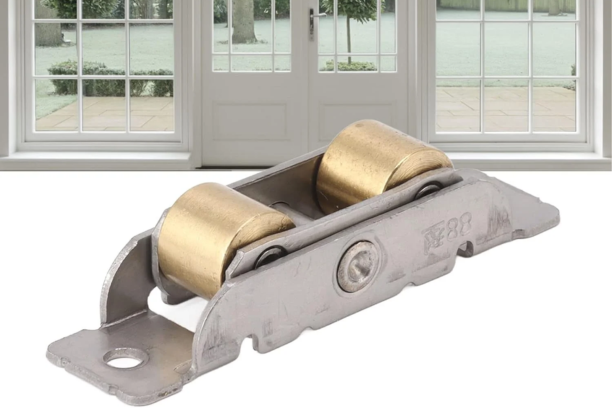
Step 4: Roller Inspection and Swap
Because tracks and rollers work together, worn rollers get replaced at the same time. Skipping this step leads to repeat damage. Our sliding door roller replacement service covers all major door brands and frame types.
Step 5: Lubrication and Final Adjustment
Finally, the technician applies a silicone-based lubricant — never WD-40, which attracts dirt. They test the door multiple times, adjusting alignment until it glides with minimal resistance.
- Door should open and close with one finger of pressure
- No scraping, grinding, or sticking sounds
- Lock and latch must engage cleanly after realignment
In addition, a quality repair includes a brief walkthrough so you know how to maintain the track between service visits.
Sliding Door Track Repair vs. Full Replacement in Santa Barbara
Knowing when to repair versus replace is one of the most important decisions you’ll face. In many cases, track repair is the smarter, faster, and more affordable choice — but not always.
When Repair Is the Right Call
Most Santa Barbara homeowners don’t need a full replacement. Track repair works well when:
- The frame and glass are still in good condition
- Damage is limited to bending, corrosion, or debris buildup
- The door is less than 15–20 years old
- Rollers and hardware are still functional
For example, a bent aluminum track from salt air exposure is a straightforward fix. In contrast, a cracked or warped frame signals deeper structural issues.
When Full Replacement Makes More Sense
However, some situations call for a full door and track replacement. Consider replacing when:
- The frame is cracked, warped, or severely corroded
- Energy bills are rising due to failing seals
- The door is outdated and no longer meets modern safety codes
- Repeated repairs haven’t solved the problem
According to the U.S. Department of Energy, upgrading to energy-efficient sliding doors can reduce heat loss significantly — a meaningful long-term benefit for Santa Barbara homeowners.
Repair vs. Replacement at a Glance
| Scenario | Recommended Action | Expected Outcome |
|---|---|---|
| Minor track cleaning & adjustment | Track service — entry-tier | Door glides smoothly within hours |
| Bent or corroded track section | Track reshaping or partial swap — standard-tier | Full performance restored |
| Full track worn on both rails | Complete track replacement — mid-tier | Like-new operation, extended lifespan |
| Frame cracked, seals failing | Full door replacement — upper-tier | Energy efficiency + safety upgrade |
| Repeated repairs with no lasting fix | New door system — premium-tier | Long-term solution, no repeat service |
Making the Final Decision
First, get a professional assessment. A trained technician can spot hidden damage that’s easy to miss. Also, consider your long-term plans — if you’re renovating or selling, a full replacement may add more value.
For a deeper look at your options, visit our repair vs. replacement guide or explore our full sliding door installation and replacement service.
Frequently Asked Questions About Sliding Door Track Repair in Santa Barbara
About This Guide
This guide was researched and drafted with AI assistance, then reviewed for accuracy by the Business in your area team. Information reflects local conditions in Santa Barbara. Last updated July 2026. For questions specific to your situation, contact us directly.
Conclusion: Your Santa Barbara Sliding Door Deserves Expert Care
Sliding door track repair in Santa Barbara is more than a quick fix — it protects your home, your family, and your investment. A damaged track makes daily life harder. It also raises real safety concerns, especially in homes with children or pets.
The good news? Most track problems are caught early and resolved fast by a trained technician.
Key Takeaways Before You Call
Here’s a quick recap of what matters most:
- Act early. Small grinding or sticking issues grow into costly damage.
- Coastal air accelerates wear. Salt, humidity, and sand are hard on aluminum and steel tracks.
- Repair beats replacement in most cases — saving you time and effort.
- Professional diagnosis matters. A trained eye spots hidden roller and frame damage you might miss.
Don’t Wait Until the Door Won’t Move
In fact, the longer a damaged track goes unfixed, the more parts it affects. For example, a bent track puts extra stress on rollers, which then wear out faster. As a result, one small repair can prevent two or three bigger ones down the road.
Also, if you’re unsure whether repair or replacement is the right call, our repair vs. replacement guide walks you through the decision clearly.
Ready to Get Your Door Sliding Smoothly Again?
Our team serves Santa Barbara County and surrounding coastal communities. We show up on time, diagnose the problem honestly, and get your door working right.
Contact us today to schedule your service visit:
- 📞 (888) 881-2007 — Call or text for a fast response
- 📋 Book online at /contact
- 📍 Los Angeles, CA — Serving Santa Barbara County and beyond
Finally, a smooth-sliding door is just one call away. Let’s fix it right — the first time.