When you need sliding door repair San Diego homeowners can trust, catching problems early makes all the difference. A door that sticks today can become a safety hazard tomorrow. San Diego’s coastal climate — with its salt air, humidity, and intense UV exposure — accelerates wear on door hardware far faster than in inland areas.
Acting on warning signs early protects your home, your family, and your investment. The sections below walk you through everything you need to know — from spotting symptoms to choosing the right repair professional in San Diego County.
Warning Signs You Should Never Ignore
Most homeowners don’t notice sliding door problems until they become serious. However, the warning signs are usually visible long before a full breakdown occurs. Catching them early keeps repair complexity — and cost — at the entry tier.
Watch for these red flags:
- Sticking or dragging — The door requires extra force to open or close
- Grinding or scraping sounds — Often signals worn rollers or debris in the track
- Visible gaps or drafts — Air leaks around the frame mean the seal is failing
- Wobbly or loose handle — A handle that shifts can compromise your lock
- Door jumping the track — A serious safety risk requiring immediate attention
- Foggy glass between panes — Indicates a broken thermal seal
Because San Diego sits along the Pacific coast, sliding doors here face unique stress. Salt particles settle into tracks and roller bearings, speeding up wear. Meanwhile, temperature swings between morning marine layer and afternoon heat cause frames to expand and contract repeatedly.
For more context, read our guide on why coastal homes need regular sliding glass door repair. If your door is already hard to open or close, don’t wait — small fixes become major repairs quickly.
Common Sliding Door Problems in San Diego Homes
San Diego’s coastal air carries salt, moisture, and fine grit — a harsh mix that accelerates wear on door hardware year-round. In our experience, the local climate is the root cause behind the majority of service calls we handle across San Diego County.
Corrosion and Salt Air Damage
Salt air is relentless on metal parts. However, many homeowners don’t notice the damage until the door becomes hard to move or stops latching properly.
Common corrosion-related issues include:
- Rusted or pitted roller bearings that grind instead of glide
- Corroded aluminum tracks with visible pitting or flaking
- Lock mechanisms that seize or feel stiff when turning
- Frame oxidation that causes the door to bind in its channel
According to the National Association of Home Builders, sliding door hardware in coastal climates degrades significantly faster than in dry inland areas — a key reason San Diego homeowners need more frequent maintenance.
Track Buildup, Worn Rollers, and Lock Failures
San Diego’s dry season brings dust, pollen, and debris. In addition, the wet season washes dirt directly into the lower track. Over time, this buildup forces rollers to work harder than they should.
Signs of track and roller trouble include:
- The door jumps or skips when sliding
- You hear scraping or grinding sounds
- The door feels heavier than usual on one side
Finally, San Diego’s temperature swings — from cool mornings to warm afternoons — cause door frames to expand and contract. As a result, locks and handles fall out of alignment, creating security and safety risks. Learn more about sliding door lock repair and replacement if your lock feels loose or won’t engage fully.
Rollers, Tracks, and Locks: What Gets Repaired
Understanding the three core components helps you ask the right questions and make smarter decisions. In our experience, homeowners who recognize these components early avoid the most expensive repair scenarios.
Roller and Track Repair
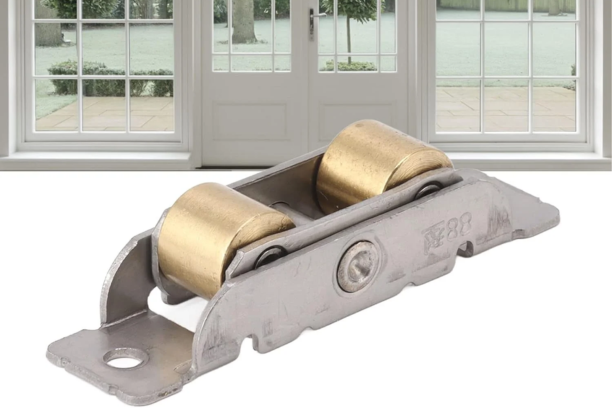
Rollers are small wheels that sit beneath the door panel and carry its full weight — often 50–100 pounds or more. Over time, they crack, flatten, or corrode, especially in San Diego’s coastal air. Replacing them is typically an entry-tier to standard-tier repair.
Tracks take a beating from foot traffic, dirt, and salt air. Bent or clogged tracks force the door out of alignment. As a result, even new rollers won’t glide smoothly on a damaged track.
For details on both services, see our roller replacement service page and track repair and replacement page.
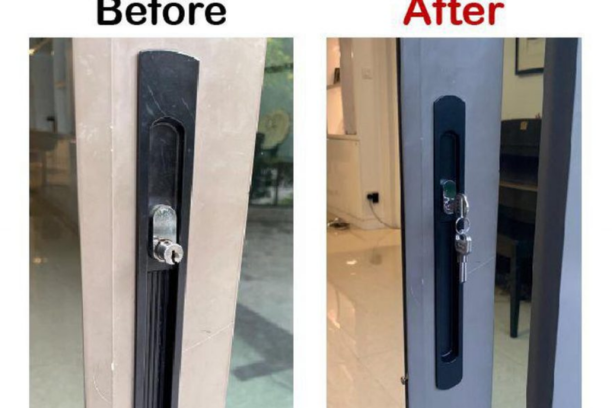
Lock and Handle Service
A faulty lock is more than an annoyance — a broken latch can leave your home vulnerable. San Diego’s patio doors face constant UV exposure and temperature swings, both of which degrade lock mechanisms over time.
Watch for these lock warning signs:
- The handle spins but doesn’t latch
- The lock feels loose or stiff
- The door won’t stay fully closed
A technician can often replace a worn lock mechanism in a single visit. For a full overview, see our handle repair and replacement page.
| Component | Common Symptoms | Repair Complexity |
|---|---|---|
| Rollers | Dragging, grinding, heavy feel | Entry-tier |
| Track | Skipping, scraping, misalignment | Standard-tier |
| Lock/Handle | Won’t latch, spins freely, stiff | Entry-to-mid-tier |
| Screen | Tears, frame bent, won’t slide | Entry-tier |
Repair vs. Replacement — Making the Right Call
Sometimes a quick fix is all you need. Other times, patching an old door just delays the inevitable. Knowing the difference saves you time, effort, and frustration.
When Repair Makes Sense
Most sliding door problems are fixable without a full replacement. In fact, the majority of service calls resolve with component-level work — new rollers, a realigned track, or a fresh lock cylinder.
Repair makes sense when:
- The frame is structurally sound with no warping or cracks
- The glass is intact and still meets current safety standards
- The door is less than 15–20 years old with no major corrosion
- Only one component has failed — rollers, track, handle, or lock
When Replacement Makes More Sense
However, some doors are simply past their prime. Replacement becomes the better investment when repair costs stack up repeatedly or when the door no longer performs safely.
Consider full replacement if:
- The frame is bent, warped, or corroded beyond repair
- Multiple components are failing at the same time
- The door fails to seal properly, driving up energy costs
- It was installed before modern energy codes took effect
According to Energy Star, upgrading to certified sliding glass doors can produce meaningful annual savings on heating and cooling — a real return worth factoring in.
| Situation | Recommended Action | Why |
|---|---|---|
| One broken component | Repair | Targeted fix is cost-effective |
| Repeated repairs needed | Replace | Ongoing costs outweigh repair value |
| Door under 15 years old | Repair first | Structural life still strong |
| Frame damage or major corrosion | Replace | Repair won’t solve root cause |
| Significant energy loss | Replace | New door pays back over time |
Still on the fence? Our guide on whether to repair or replace your sliding door walks through the decision in more detail. You can also explore new sliding door installation options if replacement is the right move.
Choosing a Reliable San Diego Door Service Provider
The right provider makes all the difference. A poor repair job can leave you with the same problems — or worse ones — just weeks later. Therefore, vet your options carefully before booking.
What to Look for in a Local Technician
Not every handyman has the skills to fix sliding doors properly. Specifically, you want a specialist — someone who works on rollers, tracks, and locks every day. In our experience, providers who focus exclusively on sliding doors resolve issues faster and more durably than general contractors.
Start your search by checking these key factors:
- Licensing and insurance — Confirm the contractor carries general liability coverage
- Local experience — San Diego’s coastal humidity demands knowledge of corrosion-resistant parts
- Written estimates — Any reputable company provides a clear, itemized quote before work begins
- Warranty on parts and labor — A solid guarantee shows confidence in the work
- Reviews and references — Look for consistent praise on Google, Yelp, or the Better Business Bureau
DIY vs. Professional Repair
Some repairs look simple but require precise tools and technique. Consequently, DIY attempts often make problems worse — or create new ones.
| Factor | DIY | Professional |
|---|---|---|
| Upfront cost | Lower | Higher |
| Risk of further damage | Moderate to high | Low |
| Tools required | Specialized | Provided |
| Time to complete | Hours to days | 1–2 hours typically |
| Warranty on work | None | Usually included |
| Coastal parts knowledge | Limited | Specialized |
For a detailed look at why DIY attempts often backfire, read our guide on why DIY sliding door repair can be risky. Visit our San Diego CA service page or browse our full services overview to understand the scope of what a qualified provider offers.
Red Flags to Avoid
Some providers cut corners. Therefore, watch out for these warning signs:
- No physical address or local phone number
- Pressure to decide on the spot
- Vague answers about parts brands or warranties
- No written estimate before work begins
Finally, trust your instincts. A professional who communicates clearly and arrives on time is usually one who does quality work.
FAQ
About This Guide
This guide was researched and drafted with AI assistance, then reviewed for accuracy by the Business in your area team. Information reflects local conditions in Los Angeles. Last updated July 2026. For questions specific to your situation, contact us directly.